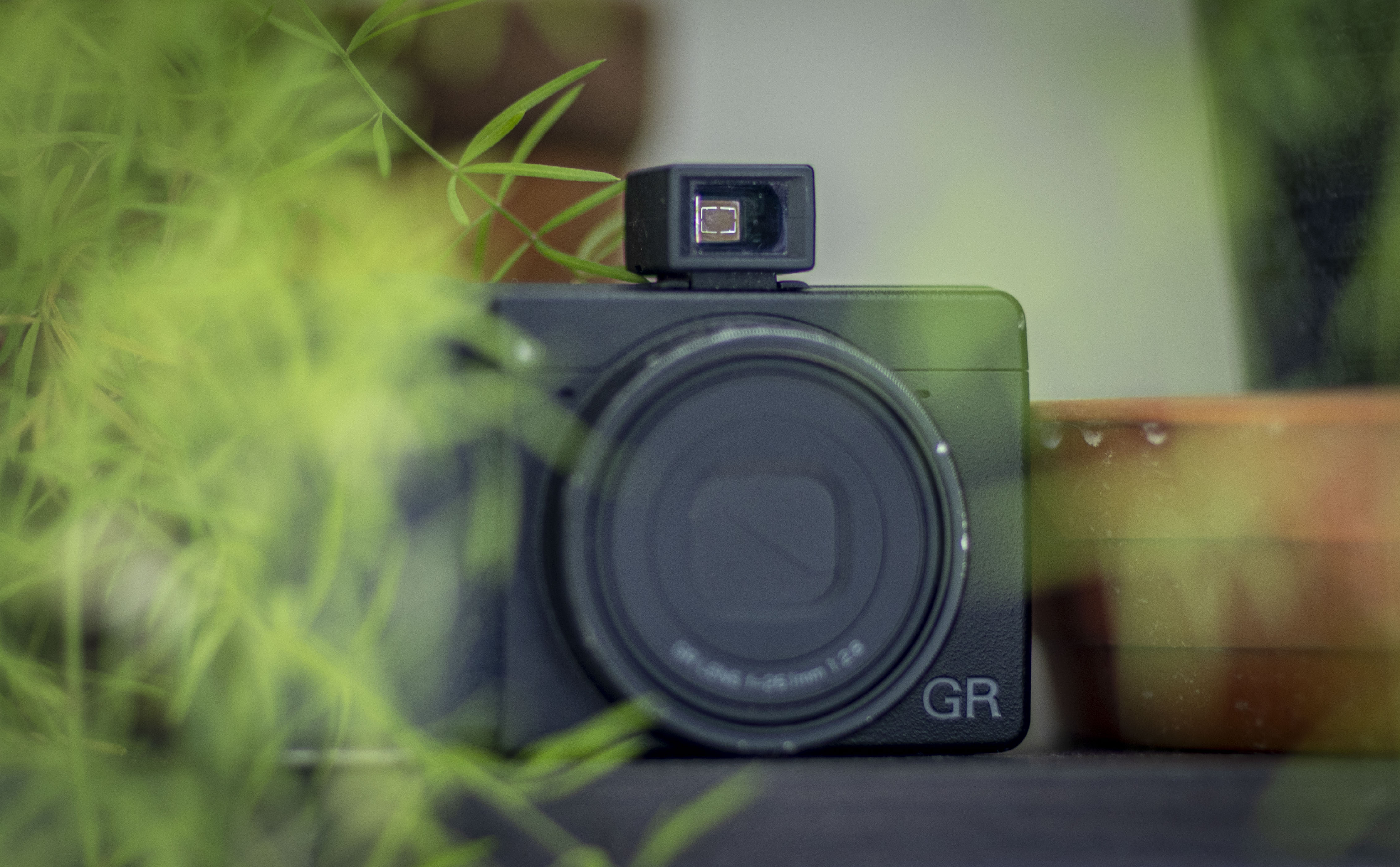
Today I’d like to talk about the camera that has become my weapon of choice for pretty much any photography outing this year – Ricoh GRiii X.
I bought this camera as a Christmas gift for myself at the end of 2022, so effectively I have been using it for 10+ months now.
So why did I buy it in the first place?

Obviously, it would be an understatement to say that I do not need another camera – I already have a few too many. Before getting my hands on a Ricoh, I was happily shooting street photography and documenting my life with Fuji X100V (another unattainable camera these days). One day a friend of mine passed me the Ricoh and showed me some photos that he took of his home, saying look, I didn’t even edit anything – this is just the way this camera shoots. I loved the colours, the tones, the depth of the shadows but most of all I loved the size of this camera. There is no other camera that has this kind of specs and can fit into your pocket… so as usual the idea had started brewing in my head.
RICOH GRIII Or GRIII X?
Now, there are two versions of this Ricoh GR iii – the regular one is 28mm field of view and the Ricoh GR iii X, which is equivalent of 40mm field of view. The first one was made in 2018, the second in 2021, but apart from the focal length difference they are pretty much identical – if you hold both in your hand you won’t even be able to tell which is which. I thought about it and decided that I am past my days of shooting wide-angle scenes, and 40 mm would be much more handy to have.
FIRST IMPRESSIONS OF RICOH GRIII X
I took it out for the first time with me to shoot our New Year’s outing in the desert. Yes, I know what you are going to say – but sand and dust! There is a general belief that once the dust or sand enters the sensor of this camera, it is as good as garbage… but I guess I was lucky and didn’t end up with a dune in a sensor.


I must say that I forgot at first to set all the modes to save in DNG files as well, so a large portion of the photos from that day were JPEG only, but to be fair it doesn’t really matter.
Secondly, it bothered me a little how plasticky Ricoh Griii X feels compared to X100V. I was thinking with this build quality it is not going to last long… but I took it on an epic trip to Scandinavia this year and it survived (so far) just fine.
IMAGE QUALITY
The image quality that this little camera produces is superb – I truly love the colour rendering as it beautifully reads the scene for highlights and shadows and exposes the way you want (depending on what you chose as AE Metering (I keep mine in highlights-weighted)). The photos come out mostly perfect and do not even ask for further editing, but of course, you can dial in a bunch of presets and tweak it to your liking. Plus the photos are generally very sharp.

COMPACT SIZE
I can’t emphasize how much I love the size of the Ricoh Griii X. It fits in the pocket, it fits in any of my bags and it doesn’t ever make my back hurt. On top of that, it looks like a point-and-shoot (which I suppose it is in some way), so the security guys of my fancy city just don’t care about chasing you when they see it (because it is so small often times they don’t even see it or think I’m shooting with a phone). For some people, I understand, this might even feel too small because the buttons also are quite small, but it doesn’t bother me at all.
FIELD OF VIEW OF THE Ricoh Griii X
The traditional focal length of this model is set to 40mm, but I set up one of the buttons to apply the crop and shoot 50mm or 71mm. I think I very often end up shooting around 70mm, and the camera saves the photo the way you see it with the applied crop. Some people out there tend to complain that the resolution of the photos goes down and that the outcome is not print-worthy, but to be honest, I think they are just pixel-peeping too much.

IMAGE STABILIZATION
One of my favourite features of this camera is the excellent image stabilization provided by the 3-axis built-in system. This means that you can shoot your photos handheld for up to 1-second exposure. No tripod! (I mean sure you can shoot on a tripod as well if you want to).

Speaking of which it has a built-in ND filter, so when you decide to shoot scenes like this one and it is still too bright because the maximum aperture you can dial in is only F16, you can turn on the ND to help you out.
SNAP FOCUS
One of the loved features of this camera is being able to set up a snap focus to shoot street photography without having the camera pre-focus and miss the shot. You can choose from a bunch of options, but for me, I keep it at infinity most of the time, unless I go to shoot the streets – then I set it to either 3,5 meters or 2,5 meters. What this means is when you fully press the shutter button the camera is going to take the photo of your chosen focal distance disregarding whatever is happening in the scene. If you half-press, it will focus like normal.
The infinity focus was helpful because I mostly got to shoot my landscape photos of this summer from the car window since there was so many god damn German Mobile Home Vehicles that there was absolutely nowhere to stop and take photos. A few times, I’d forget that the snap focus is set to infinity so it would result in something like this (but honestly still love this photo).

THE BAD
Now let’s talk about all those things that might be preventing you from buying this camera – first of all the price. Yeah, it costs around a thousand bucks today, maybe even more because it is in high demand and to be honest even rather hard to buy (definitely nowhere to buy in the shop in Dubai).
The battery
Well, I don’t know what you are expecting, my dudes, did you see the size of this camera? To be honest, it is not worse than Fujifilm batteries. Only one time I managed to deplete it completely when going on a photo walk on a rather hot day, and even then I took 400 images before it died. If you are so concerned, either buy a second battery (good luck trying to find one) or just take a portable battery charger with you and charge it up while having a break in the cafe.
Non-interchangeable lenses
might be a drawback for some, but come on – you’d never get such a compact camera if you could slap another lens on it. On top of that, if you so desire for more zoom, there is an option to buy a magnifying lens.
Too much noise at high ISO
that is sadly true, but if your subject is not moving much consider using the image stabilization features and lower the shutter speed in order to lower that ISO.
Not much separation
even at F2.8 – also true, but I don’t think it is the purpose of this camera, to be honest.
Unreliable focusing
It does sometimes focus on something randomly or wouldn’t focus at all, but to beat this we have the snap focus that I recommend you learn how to use.
Non-existent video features
Well, they do offer you an option to shoot 1080p videos, and interestingly image stabilization doesn’t work for video, the wobble when you move it left or right is horrendous, and focusing is super slow. So generally, it’s bad – but I have yet to see anyone who bought this camera for video features.
So if anything of the above is important for you – I guess choose some other camera for yourself and let me enjoy mine.
To finish up, here is a bunch of photos taken over the last 10 months:


Thank you for checking it out, feel free to also check:
Much love,
Anna


Leave a Reply