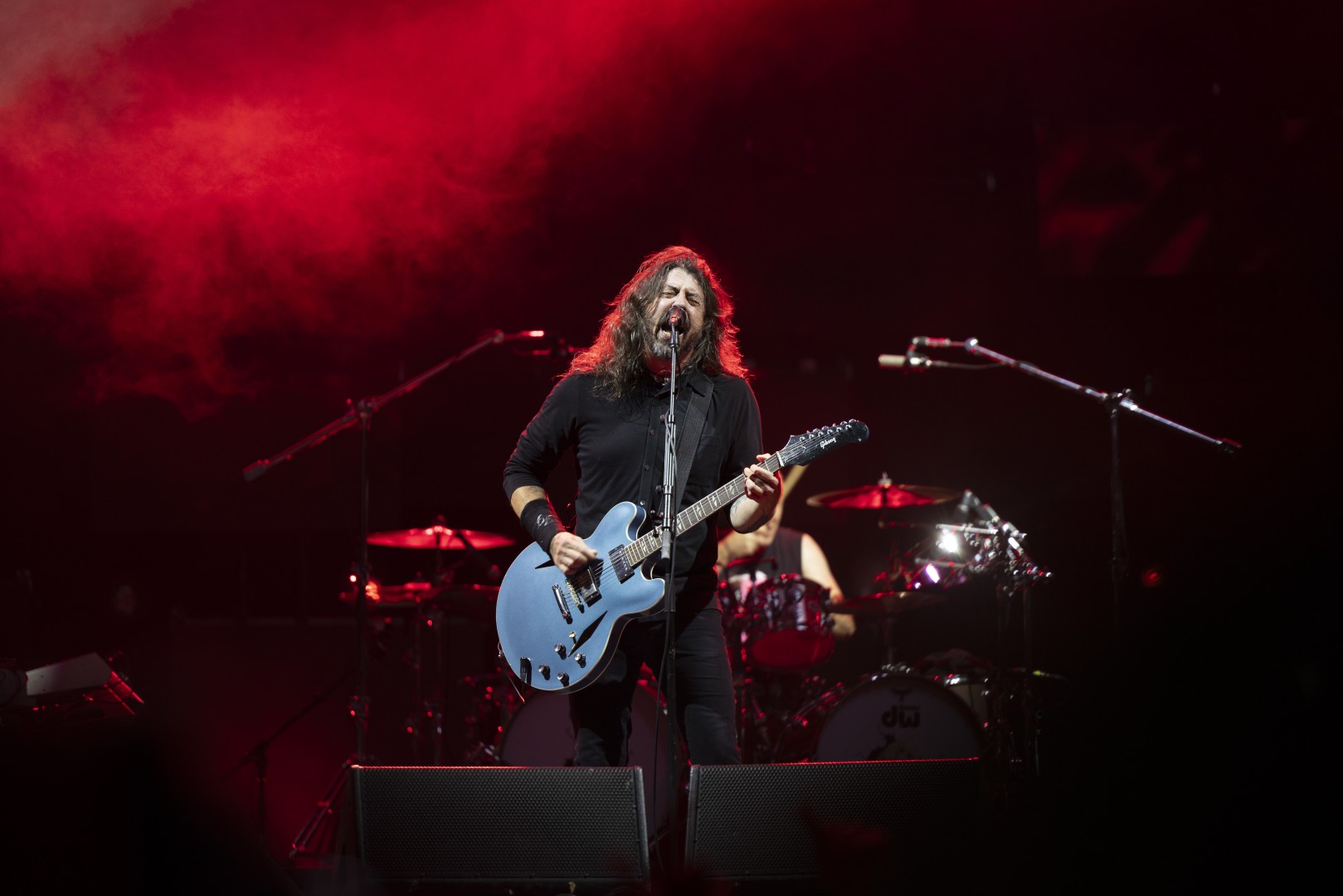
Loud music, lasers, sweaty fans – sounds like photographing concerts is a fun job to do, but is it actually the case? Let’s dive into the specifics of concert photography, shall we?

There are a lot of challenges that come with the task of concert photography, but there are of course amazing perks as well. Like getting to see a live show without paying for it, and hopefully even getting paid at the end of the day.
The Lighting or The Lack of It
Unless you are photographing some village band that is playing in the middle of the day, chances are the venue is going to be dark. Darkness elevated with artificial light sets the desired mood for the concert, and as a photographer, you can only hope that the lighting guys know what they are doing (because this is not always the case). This artificial light situation poses three challenges for the one trying to capture it with the camera:
- If they are using all the available RGB colours they have in their arsenal, don’t even try to set white balance to something specific, just keep it at auto and hope to make it somewhat decent in post processing.
- If the lights are going from non-existent to full blast every 3 seconds, best you put your ISO to Auto, or you will be spending the whole time dialing the ISO up and down.
- I generally set the exposure metering to at least -0,7, because otherwise the performer gets too much blown out by the camera, because it is trying to adjust all the darkness around into a properly exposed image. Sometimes, exposure metering has to go to even minus 1.

Lens Choice
Because the concert venues are always quite dark (or stadiums at night as well), you probably would be shooting everything with the open-wide aperture. Therefore, it is best that you have at least an F2.8 lens, but, of course, something with lower numbers will serve you even better. The killer combination *that works pretty much for every job* is 24-70 and 70-200mm, however, often times an ultra-wide or a fish-eye could be handy as well.

Camera Settings For Concert Photography
It all depends on what is going on in front of you, but one thing I can tell you is the Auto settings are not going to work aaaaand you have to know which buttons to press to change the settings very quickly, because live events are unpredictable.
Shutter speed most often has to be at least 1/125 if not 1/250 because performers dance, jump around and generally don’t tend to stay still. It is unlikely that you would be allowed to use flash, and even if you do, it usually illuminates too much the stage equipment and just doesn’t do your photos any good.
If the artist is moving back and front all the time, you should consider shooting them with the servo focus mode and probably best is to grab as many photos as you can and delete the bad ones later, so put it to burst mode of your preference.

Composition
Unlikely you will have much time to think about it, and often you won’t even have much choice to move around, being stuck in one spot, but of course try not to crop artists’ hands, or feet in an awkward way. If there is a meaningful background, you need to capture a few shots of them in the atmosphere.

General Rules of Concert Photography
Every concert photography assignment is different. Sometimes you are allowed to shoot from the pit for up to 3 songs, sometimes you are allowed to go on the stage with the artists for a song or two. Mostly big names will only allow you to photograph 3 first songs, and then you have to pack up and chill out. The advantage of shooting from the pit is to get a few close-up portraits, but they all going to be kind of up the chin. Best is to shoot from a bit to the side and at an angle, however, this might include some unwanted stage equipment. The pit is a very, very loud place and I really advise you to wear hearing protection if you want to keep your ears functioning until you are older.
Shooting from the crowd gives you a more dynamic view and adds depth to the images, but you have to fight for a spot with drunk people and manoeuvre around the never-ending hand with the phone situation, so it is not all rosy. Each concert has a different crowd, some are super-friendly and others are not at all. Don’t forget to grab a few photos of the fans, they make the atmosphere of the concert complete.

When photographing from the crowd, keep moving around and don’t stay in one spot and ruin the experience of the concert for someone with your camera above the heads – everyone essentially came here to see the show, not your camera screen.
Other Suggestions
You might want to consider bringing a change of clothes and some food with you and definitely water, because food and water and concerts cost a bomb, and the queues are usually way too long.
Personal Experience When Doing Concert Photography
I have had a chance to shoot quite a bunch of Big Names concerts, but commonly it is always a mess. There is so much going on trying to organize these shows, that they might forget to issue permits, and give the relevant badges to the photographers. I have had to park kilometers away and walk with my equipment in the heat, just because organizers don’t consider us to be essential enough to provide parking spots.
Some musicians are super friendly both to the fans and to the photographers, others just don’t want to have you anywhere near them because of their personal insecurities or lack of arrangements with the management of the event, so we got pushed around by securities and yelled at just for doing our jobs.

I am also yet to experience a decent payment for these kind of jobs, because the budgets for photography here are always the bare minimum, but you have to give it your 100 per cent.
You get so tired after doing 4 days back to back festivals that you feel like you climbed Kilimanjaro, so if you have low energy levels generally, I don’t think this is a right job for you.
In the end, the most important thing is to have fun, shoot raw and hope for the best. There is only so much you can do when tackling concert photography.

Good luck and thanks for tuning in,
Anna
Did you ever had to do concert photography and how did it go?
Leave a Reply